
How do you make a mystery TTRPG come to life?
A scrap of paper flutters across the ground before dissolving into the puddles, its ink bleeding into nothingness. The case file in your hand feels heavier than it should. This story won’t simply unfold: you must completely throw yourself into this investigation. The mystery comes to life only when you do.

Hi again! I’m Iris, and over the next 1.5 months I will be creating my very own TTRPG murder mystery as part of my VALUE Foundation internship. In the last blog post, I talked about building the setting, creating player character concepts, and crafting the NPCs who inhabit this foggy little mystery. This time, we are digging into the story a bit deeper: how do you make all those elements feel alive?
Into the fog
Immersion, according to my ever-helpful friend Cambridge Dictionary, means “becoming completely involved in something.” It is a state of involvement in which you feel like you are truly in the fictional world you are interacting with. It is that feeling of losing yourself in a book or game, where you do not notice that it has already gone dark or that you forgot to make dinner (or maybe that is just my ADHD).
Immersion helps players understand and connect to the story. If the story is told in such a way that you feel as if you are walking on the cobblestone streets in London, it is much easier to roleplay them. Should your character press the witness harder? Pause to study the room? Run? (Hopefully not.)
Of course, immersion can also be ‘broken.’ For example, if one of the NPCs suddenly starts shouting “hey girlypop I heard that a dude just died,” I would not be able to feel like I am an investigator from 1880s London. This fourth-wall break is normal, and sometimes necessary, e.g. to clarify a rule or simply to pause the game to grab a drink. But too many, and the story begins to feel less like investigative drama and more like a chaotic rehearsal. So, how can we facilitate immersion?
The magic of modalities
A TTRPG module can provide tools to make the world feel textured and alive. When I was brainstorming on how to make my module immersive, I started thinking about the different modalities of a game. For a video game for example, different elements of the game work together to tell a story: the character walking through a dark environment with a weak flashlight, accompanied by swelling music and a vibrating controller as something horrifying jumps at the character? That builds tension. These modes (sensory, audiovisual, etc.) each add to the bigger narrative. A TTRPG can use its own set of modalities that could support immersion:
- Auditory: Fitting music or a soundscape
- Visual: Images of rooms, characters, items, etc.
- Spatial: Maps of locations
- Sensory: Moody lighting and scents from candles or food
- Interactive: Handouts for puzzles, or a representation of an in-game document
I sadly do not have the time to compose my own soundtrack or sculpt Victorian miniatures. Nor are all of these things accessible in every TTRPG setting. So, my focus is on what I can include: location descriptions, clear NPC details, and maybe — if time allows — a crime scene map, a few character illustrations, or a puzzle handout. A playlist is definitely on the priority list, but we’ll see how generous future Iris’s schedule is.
Adding flavour
Even the most beautifully written module only becomes a story once people sit down to play it. As my partner once explained to me, TTRPGs are basically collaborative writing sessions: the module is the outline, and the GM and players fill in the details – they add flavour.
Players can support immersion by roleplaying their character:
- playing actively and sharing spotlight moments
- describing flavour added to their actions actions (“I kneel beside the footprint, notebook in hand, squinting at the mud. Something feels wrong.”)
The GM can support immersion by roleplaying and narrating:
- bringing NPCs to life with tone, expression, or even different voices
- adjusting pacing based on the group
- narrating the story in a way that fits the atmosphere
The module provides the structure, but the table provides the soul. Including suggestions and tips throughout the module will help people understand where flavour can enrich the moment.
Having explained what immersion is and how to integrate it, what is next? The flavour makes the story come to life, but this is only the case if we add the most important ingredient: actually playing it! In the next blog post I will dive into how I will turn all of this into an actual module: designing the pages, translating all my thoughts into instructions and narratives, and adding all these extra details that make it engaging.
Until then, happy holidays, and keep your theories delightfully unhinged!
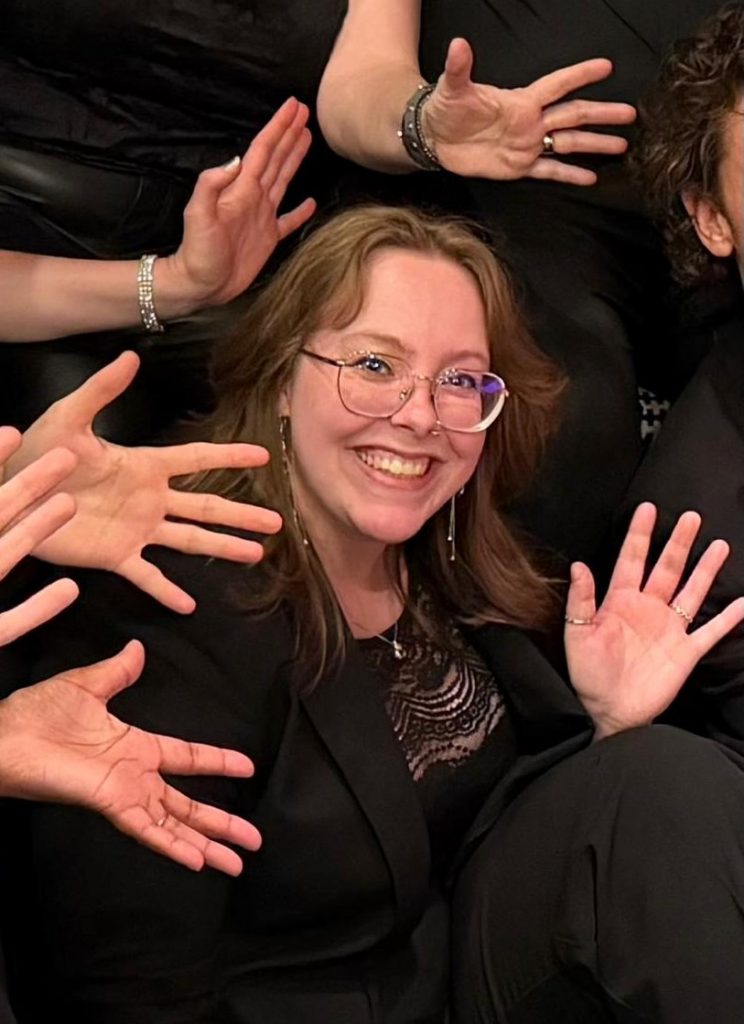
Iris van der List is a Research Master student of Literary Studies at Radboud University and an intern of the VALUE Foundation. She loves examining how narratives come alive in different media and is currently investigating narrative horror games. Iris is a self-proclaimed console gamer girly and loves a wide range of narrative-rich and immersive games. But despite the release of amazing new games, she always seems to find her way back into a Skyrim rabbit hole (sorry). If you would like to contact her, you can message her via LinkedIn!